
Photovoltaic history is the story of how a scientific discovery became one of the most important technologies for the future of energy. From the first solar cells to solar-powered satellites, from blue polycrystalline modules to modern black monocrystalline photovoltaic panels, solar energy has evolved from a niche application into a key pillar of the global energy transition.
On October 19, 2015, Energyhunters took part in an Erasmus+ European educational project, invited by the non-profit organization Younet to deliver a technical presentation on the evolution of photovoltaic technology, the solar energy market and the future outlook of PV systems.
The presentation was addressed to students from a technical high school in Bulgaria. It was a valuable opportunity to explain not only how photovoltaic technology works, but also why solar energy can play a central role in building a cleaner, more distributed and more sustainable electricity system.
Photovoltaic history: from solar cells to satellites
The history of photovoltaics began long before the modern solar industry. The photovoltaic effect was discovered in the nineteenth century, while the first practical silicon solar cells were developed in the twentieth century. At the beginning, photovoltaic cells were expensive and mainly used for special applications, especially in space.
One of the most important milestones in photovoltaic history was the use of solar cells on satellites. Space applications demonstrated that photovoltaic modules could generate electricity reliably for long periods, even in extreme operating conditions. This helped prove the technical potential of solar energy before its large-scale use on Earth.
The evolution of photovoltaic modules
Over time, photovoltaic modules became more efficient, more reliable and less expensive. Early solar cells and modules were followed by crystalline silicon technologies, including blue polycrystalline panels, which became very common in the first large wave of terrestrial photovoltaic installations.
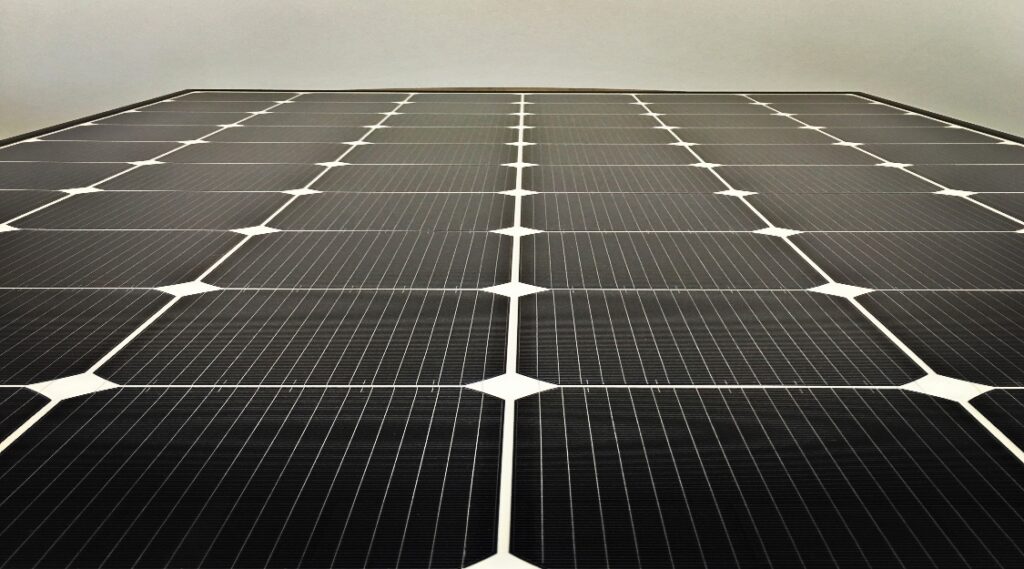
Today, the market is increasingly dominated by high-efficiency black monocrystalline photovoltaic modules. These panels offer better performance, improved aesthetics and higher energy density, making them suitable for residential rooftops, commercial buildings, utility-scale solar farms and integrated energy systems.
Photovoltaic outlook and the future of solar energy
This photovoltaic outlook shows that solar energy is more than a renewable technology. Photovoltaics is modular, scalable and distributed. It can be installed on rooftops, industrial areas, agricultural land, parking structures and large solar farms. This flexibility makes PV one of the most powerful tools for accelerating the energy transition.
The future of photovoltaic technology will depend on several factors: higher module efficiency, better inverter performance, storage integration, digital monitoring, grid flexibility and new business models for distributed generation. In this scenario, solar energy can help reduce emissions, improve energy independence and bring electricity production closer to people and communities.
Download the photovoltaic history presentation
The presentation Photovoltaic Outlook: A Review on Solar Energy from the Past to the Future summarizes the main steps in the evolution of solar technology, from the origins of photovoltaic cells to the future role of PV in the global electricity mix.
If you are looking for a clear overview of photovoltaic history, solar technology evolution and the future of solar energy, you can download the full presentation below.
Download the photovoltaic history presentation PDF
The photovoltaic age has already begun
Spreading knowledge about photovoltaic history and solar energy is essential to support the transition towards a cleaner and more resilient energy system. Solar power is no longer only a promise for the future: the photovoltaic age has already begun.